Similarly to chapters nine and ten who primarily focused on sustaining the biodiversity of species and terrestrial lands, chapter eleven focused on the biodiversity of aquatic ecosystems. The chapter thoroughly discusses the leading factor that is influencing the destruction of this ecosystem. Of course, the answer to this ongoing concern of aquatic degradation is the human population. As years progress, and the human population continue to grow and advance in technology, their demands for certain resources increase. However, this demand is causing the depletion of our natural resources to occur far too quickly than the earth can endure. In order to fully understand our impact, we can refer back to the acronyms HIPPCO.
To start off, humans play a large role in the habitat loss of infinite amount of species. A great example that perfectly demonstrates our impact is the decline in the biodiversity of coral reefs. Coral reefs contain one of the most diverse species population. Many nations, and communities heavily rely on fishing for monetary reasons that influence the success of their economies, however, as our demands increase, the methods of acquiring these fish species becomes less ethical and more detrimental. One of the most negatively impacting method of fishing that the chapter references is trawler fishing. This form of fishing is used to obtain species such as shrimp, cod, scallops etc who live in coral reefs. it is used to capture fishes living near the ocean floor. This method is essentially a capturing tool that resembles the actions of a bulldozer. It scrapes the ocean floor, and in the process, it demolishes any existing habitat in the way. As Miller states, coral reefs are one of the largest habitats affected by human activity. Surprisingly enough, these methods of fishing as mentioned above are not the only factors influencing the degradation of this habitat. Humans have also influenced the destruction of coral reefs with activities that increase the impact on pollution, ocean acidity, and climate change. Climate change affects the temperature of the ocean, causing trouble for the species living in the area. As for the acidity of the ocean, most human activities influence the emission of carbon dioxide in the water, which severely damages the health of these coral reefs. The reading claims that if humans don’t set boundaries to the carbon dioxide emission of their activities, all coral reefs will vanish in about eight decades.
As I mentioned before, the destruction of aquatic ecosystems refers back to HIPPCO and the daily activities of humans. Another factor that strongly affects the well being of aquatic life is the invasive species humans introduce to these environments. Invasive species contribute to the loss of many other species and their population tends to boom when they start taking over an ecosystems environment.
The governments have made several attempts to protect certain aquatic biodiversity, but there is a few issues we face that limits our knowledge of the damage we are causing. First off, there is a high demand for many aquatic species, and we are unable to properly measure our fishprint. Also, what I find most important is that the ocean is an open access resource, therefore, humans think it contains an infinite amount of resources to sustain their life. In other words, because of these reasons it has been difficult for the government to properly regulate the use of the aquatic biodiversity.What I realized from reading this chapter on aquatic biodiversity is that the government/ people only intervene in the destruction of these natural habitats/ biodiversity when species are on the verge of extinction. It astonishes me how the only motive for humans to protect these species and habitats is for personal reason and greed. Anyways, as humans encounter this loss of species and resources that influence their economies, they become more concern with the salvation of the aquatic ecosystem (or any ecosystem). Also, because most of the living species on earth have not been properly identified, humans are not even fully aware of the other species that are demolishing. For all we know, the species we have not yet recognized can be strongly influencing our everyday activities. Also, marine reserves that have been established by the government is not enough to effectively protect most aquatic biodiversity. According to Millers, less than one percent of the ocean is protected, therefore, the number of species unprotected is unimaginable.
On the contrary, many moratoriums imposed by the government have protected a few endangered species. The texts refers to two very important species that wee on the verge of extinction, but through monetary incentives, and the monetary value of tourism companies, many cities have made an effort to protect certain species such as the blue whale and the leatherback turtle.
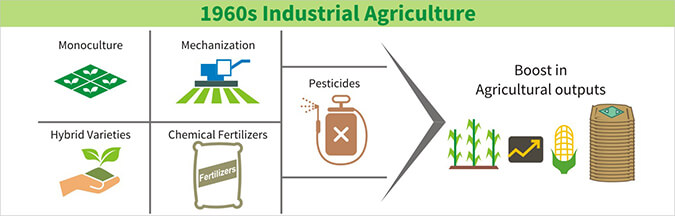
In the following chapter, chapter twelve, Miller focuses on pest management and good production. These two topics correlate because the agricultural system often used in the United States is very detrimental the environment. An important aspect of agriculture in the country is our attempt to manage the pests in these food production environments. The most commonly know method of food production in most developed countries is industrialized agriculture. This form of production aims to feed a large population of people. However, this type of agriculture has a variety of negative consequences on our environment. For example, industrialized agriculture causes soil erosion because the soil is overused and overly saturated from the farming equipment/ products. Also, because this large mass of food production requires so much water, a lot water is being wasted, and this at times causes floods. Lastly, because of this abundance of water, many of the nutrients used to farm such as nitrate and phosphorus are carried away and they seep into major waterways leading to an excessive amount of nitrate in our water. Lastly, industrialized agriculture uses a large amount of pesticides in order to control the pests damaging the crops. This overuse of the chemical negatively affects the environment in several different ways. A commonly used pesticide that has been categorized as one of the more toxic ones is called DDT. Sure this chemical eliminates the pests to a certain extent, but at the same time, it is killing the other species in that environment. The difference between industrialized agriculture and sustenance agriculture is that second form of farming is most popular in less developed countries. Also, this form of food production is primarily used by families, and it is mainly used to provide food for the family of the producers.
An interesting approach to improve our systems of farming was presented in class by a fellow classmate. He introduced and spoke about vertical farming which aims to produce food in a much more sustainable manner. This form of agriculture is a form of food production aimed to work in urban cities. Vertical farming minimizes normal costs of food production and the transportation of food. It also focuses on using more sustainable forms of energy from the sun (solar energy). Most importantly this method of improving our food production minimizes its use of pesticides which decreases the degradation of certain species in the area along with natural resources such as water. In my opinion, vertical farming seemed to be an interesting approach to efficiently production a large amount of goods because it allows farmers to crop produce all year long.
The texts mentions moratorium, but it discusses how it is more so based on compliance and voluntary contribution.
-What are ways to encourage the compliance of these laws for nations who refuse to abide by it?
-Why are these laws to temporary? (Natural habitats cannot be restored as quickly as these laws are in effect)
Word Count: 1298
Miller, G. Tyler, and Scott Spoolman. Living in the Environment. Cengage Learning, 2015.
“ENewsletter | Sustainable Agriculture.” HiMedia, http://www.himedialabs.com/HML/Pages/enews5/Sustainable-Agriculture/.

 Liz's Blog