The two chapters assigned for this week mainly concentrated on understanding the importance of preserving the ecosystems biodiversity. In these two chapters, they primarily focused on biodiversity and its direct link to specific species, and terrestrial biodiversity. To begin, the first chapter emphasized one problem we have as a society: we prioritize just animals. However, it is important to note that the conservation of both plants and animals is essential in order to sustain an ecosystems biodiversity. According to the readings, plants provide both humans and animals with ecological services that allow them to survive. For example, plants contribute to most productions of different forms of medicine. Also, plants assist in producing oxygen, influencing respiration for most organisms. Next, plants also play a role in absorbing carbon dioxide during the process of photosynthesis. Last, but not least, plants are also used as a source of nutrition and food for many different organisms. As noted in class, this idea of simply acknowledging animals, and ignoring the importance of plants is an ideal representation of an anthropocentric perspective. This simply refers to a worldview in which humans prioritize themselves, while idolizing animals simply for aesthetic reasons (cute animals).
The chapter also thoroughly discusses the importance of certain processes that occur, usually because of humans themselves. One of these detrimental processes is extinction: when a certain species no longer exists. The earth itself, has encountered about six different mass extinction within the course of its existence. Most of these extinctions mainly occurred before the existence of humans. However, this does not mean humans play no role in the extinction of certain species. Most species extinctions occur due to personal human/ monetary interests. For example, the texts mentioned the extinction of the passenger pigeon. This bird species primarily resided in North America, however, it was considered to have strong migratory habits that encouraged them to constantly travel to the south. The Passenger pigeon was said to travel and live in large groups. They travelled in such great numbers, that when they migrated, it took a few days for them to fully cross a certain location. These pigeons were viewed as a great resource that would contribute to the nations economy, therefore they were often hunted and killed as a source of food, and for their feathers (clothing). Within a few decades, the Passenger Pigeon became extinct. Although extinctions occur naturally, humans tend to drastically speed up this process. What is even more concerning is that in order for earth to recuperate from the drastic loss of species, it would take millions of years for the introduction of new organisms. Lastly, as demonstrated in the class film, if humans continue to live in such an unsustainable manner that continues to exploit earth’s natural resources, half or more of earth’s identified species will be extinct.
Interestingly enough, most of the species residing on earth have not yet been identified by scientist. In other words, Miller states that only five to ten percent of the species on earth have been identified. Therefore, if our actions continue to affect identified species, there is no doubt that these unidentified species are also being endangered or extinct. It is important to acknowledge this loss that has been influenced by our actions because these organisms play a large role in the natural services that enable us to live.
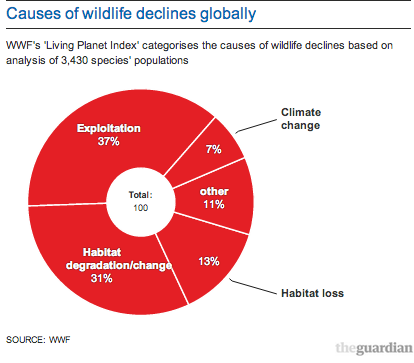
Humans influence the survival of these organisms in several ways. As mentioned in the textbook, the acronym HIPPCO refers to the different factors that threaten biodiversity. The greatest influencers of biodiversity degradation/ harm is habitat loss, invasive species, population growth, pollution, climate change, and overfishing. Overall, humans strongly contribute to these factors that influence the loss and degradation of biodiversity.
A part of the text that really resonated with me was a quote expressed by Aldo Leopold:
The last word in ignorance is the person who says of an animal or plant: “What good is it?”… If the land mechanism as a whole is good, then every part of it is good, whether we understand it or not. Harmony with land is like harmony with a friend; you cannot cherish his right hand and chop off his left.
Leopold’s perspective really emphasizes this idea that the earth function as one whole unit instead of individual units. In other words, all living things depend on each other to efficiently function. All organisms are interdependent, and it is pointless prioritizing one species over another. All living things have their own function, and in some way, they contribute to the well being of the ecosystem. We must treat our land the way we would treat another human individual. An example of a commonly neglected species that are highly important in our ecosystem are bees. Bees are essential in order to encourage the process of pollination and production of certain goods. Therefore, the way we rely on bees for certain natural services, is the same way we rely on so many other organisms, and it is important to acknowledge this fact.
As the chapters progressed, Miller soon introduced the importance of protecting the biodiversity of terrestrial lands. Surprisingly enough, the only land preserved as public land accounts for only five percent of the earths land. Whereas land reserved for strictly humans is ninety five percent (Miller). This statistical analysis of how much land is preserved for wildlife is quite sad. In order for humans to live a life of leisure, pleasure, and comfort, they need to rely on their natural environment. Therefore, reserving such a large quantity of land for just humans is just encouraging the exploitation of more natural resources and services. Furthermore, this small percentage preserved for other non human organisms
What still surprises me is the amount of land that remains reserved for just humans. According to Miller, nearly all of the land on earth is strictly reserved for humans. Even with most of earth’s land being reserved to just humans, our detrimental impact on the environment is slowly spreading to other places, such as the land reserved to just humans. If such an immense amount of land is reserved to just humans, we should acknowledge the damage we are doing on the environment and ourselves. Personally, I believe there are so many ways to contribute to the well being of the environment. For example, as a person who lives in NYC, I constantly volunteer with NYC Parks. Through these volunteering experiences, I am able to acknowledge and internalize some basic knowledge that allows me to contribute to my environment. My point is, with such a large portion of land dedicated to just humans, it is our responsibility to maintain any form of biodiversity in our environment. For example, we can sustain terrestrial biodiversity by aiming to protect threatened areas or species. This can be as simple as acknowledging our actions, and reducing our impact on our environment. Also, we can protect remaining undisturbed areas, restoring damaged ecosystems, and sharing with other species much of the land we dominate (being considerate).
If humans are slowly affecting the extinction of certain species, will our detrimental acitivities be the main cause of human extinction? (global warming).
Word Count: 1200
Miller, G. Tyler, and Scott Spoolman. Living in the Environment. Cengage Learning, 2015.
Carrington, Damian. “Earth Has Lost Half of Its Wildlife in the Past 40 Years, Says WWF.” The Guardian, Guardian News and Media, 30 Sept. 2014, http://www.theguardian.com/environment/2014/sep/29/earth-lost-50-wildlife-in-40-years-wwf.

 Liz's Blog